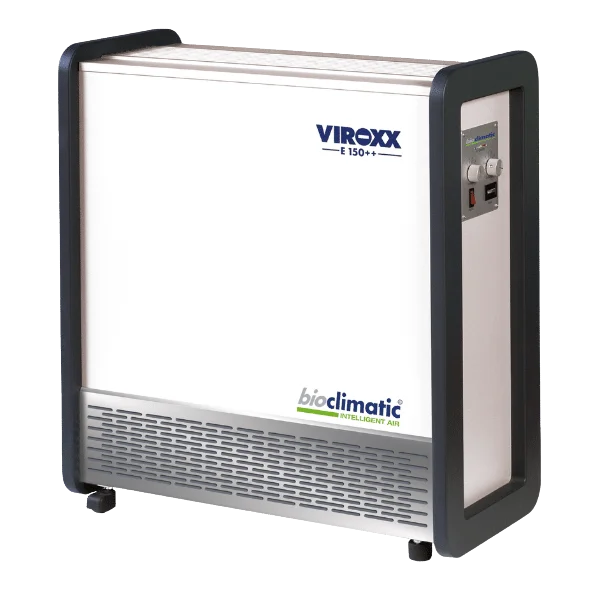

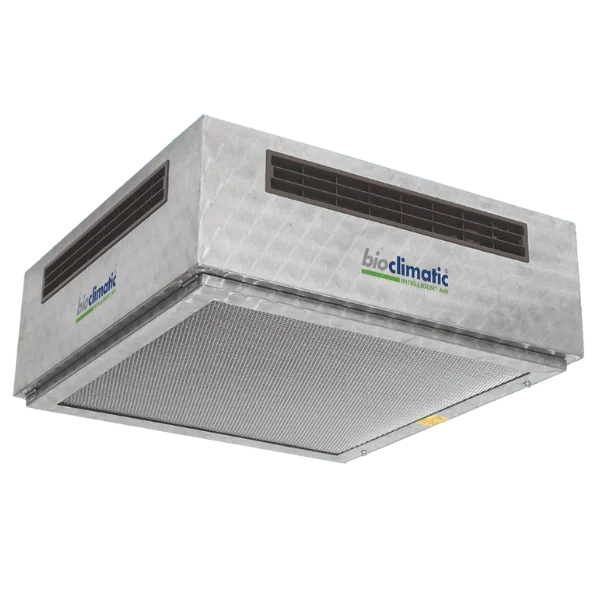
bioclimatic airport air purifiers inactivate pathogens, improve air quality and reduce infection and health risks.
Thousands of passengers travel through airports every day, using security checkpoints, lounges and conference rooms – often with poor ventilation. Good air quality is essential for comfort and protection against infection when traveling and working.
Good air at the airport is not an impossibility, because there are ways in which high-quality air purifiers can provide airports and passengers with purified air. The devices are able to reduce pollutants. In this way, they not only improve the air we breathe, but also minimize health risks to increase passenger safety.


Air pollution at airports is a complex issue that affects both travelers and airport staff. It can also have an impact on the entire airport infrastructure – as the coronavirus pandemic has shown us. However, the sources of air pollution at airports extend far beyond common viruses and bacteria.
Let’s think about the airplanes themselves. The engines of the aircraft emit exhaust gases containing carbon dioxide, nitrogen oxides, particulate matter and other harmful substances. During take-off and landing in particular, large quantities of these particles are released and accumulate in the surrounding area, leading to increased air pollution. However, ground vehicles also contribute to air pollution at the airport. This is because the engines in operation also produce harmful emissions, which
bring with them.
Indoor air quality
If we now take a look inside the airport building, there is a lot of public traffic and a lively atmosphere. Close contact in queues, crowded gates and shared spaces such as lounges and restaurants contribute to the easy spread of viruses and bacteria. There is an exchange or transmission of viruses or bacteria simply because many people come together in enclosed spaces. Another factor is volatile organic compounds (VOCs), which have an equally high negative impact on the air. They are released into the air we breathe as gaseous and invisible substances through evaporation. Such volatile compounds originate, for example, from
They can cause irritation to the eyes, nose and respiratory tract in particular. The coronavirus pandemic has shown us what viruses and bacteria can do. We are now also aware of how quickly aerosols can spread and that thorough disinfection of all surfaces is unfortunately not enough.
All of these factors contribute to air pollution and pose considerable health risks. Not only people who spend a long time at the airport – such as employees, crew members and frequent flyers – are particularly at risk, but also people who only spend a short time at the airport, as they also breathe in the air and its impurities. Good air quality in these areas is therefore particularly important to reduce the risk of infection and protect the health and safety of travelers and airport staff. This is particularly relevant in places where a constant flow of people from different regions and countries come together.
Various measures are required to reduce air pollution. The introduction of more environmentally friendly aircraft engines, the use of electric ground vehicles and the implementation of better exhaust gas purification technologies are just some of the approaches. Investments in improving public transport links to the airport and promoting carpooling are also important steps towards reducing traffic and thus air pollution.
But all of this requires complex processes and long decision-making paths. It is easier to use air purifiers, which have proven to be an effective measure to improve air quality and protect the health of travelers and airport staff. This is necessary because there are many sources of air pollution:
For this reason, air purifiers have become a necessary addition to airport infrastructure. Modern air purifiers work with bipolar ionization, which allows them to effectively neutralize a wide range of pollutants, particles and microorganisms. Some high-performance filters (e.g. HEPA or UV-C) are capable of absorbing volatile organic compounds and odors or filtering the finest particles such as dust, pollen and germs. Air purifiers can therefore significantly reduce the concentration of harmful substances in the air and considerably improve its quality.
Areas and rooms in which air purifiers can be used at airports
Air purifiers can be extremely useful in various areas of a building at the airport to clean the air. These include:
Wherever large numbers of people come together, room air purifiers can help to remove pollutants and pathogens from the air using bipolar ionization, which goes beyond conventional filtration, and keep the risk of infection low by demonstrably reducing the load of viruses and bacteria.
The difference to conventional systems: our air purifiers are not only quiet, but also efficient in cleaning areas of different sizes, regardless of the room size. This also benefits allergy sufferers and protects everyone present from health hazards caused by pollutants in the air. In addition, there is no need to change filters, which makes maintenance uncomplicated and ideal for public buildings.
Through the targeted use of air purifiers, airports improve indoor air quality, enhance the customer experience and contribute to energy savings – an important factor in view of the increasing demands for sustainability and hygiene in air travel and tourism.
Advantages of using air purifiers at the airport
The use of air purifiers at the airport offers a variety of benefits that have a positive impact on both passengers and employees. Here are some of the most important benefits:
The targeted use of air purifiers at airports can therefore not only help to improve indoor air quality, but also protect people’s health and well-being and increase passenger comfort. With these benefits, airports can emphasize their commitment to a healthy and pleasant environment while promoting the safety of everyone involved.
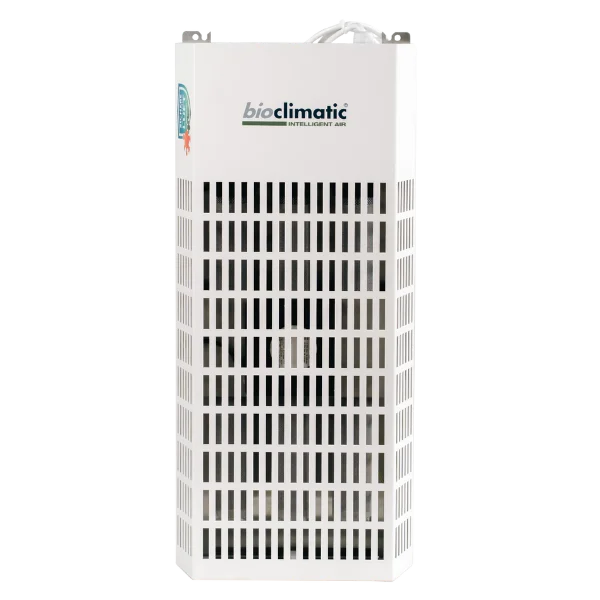
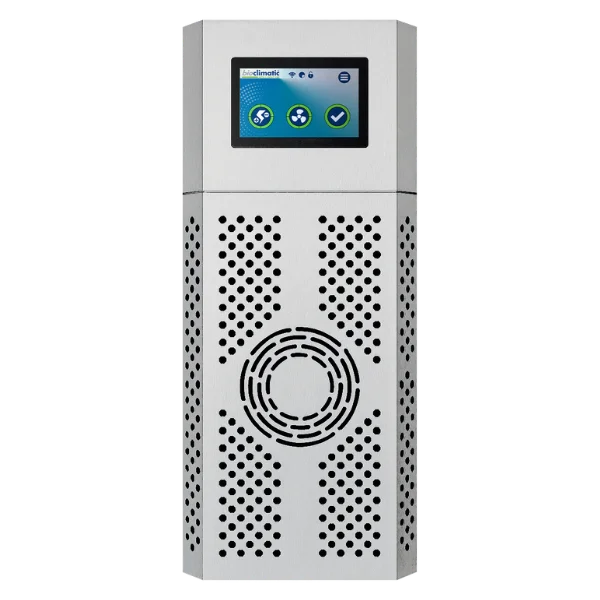
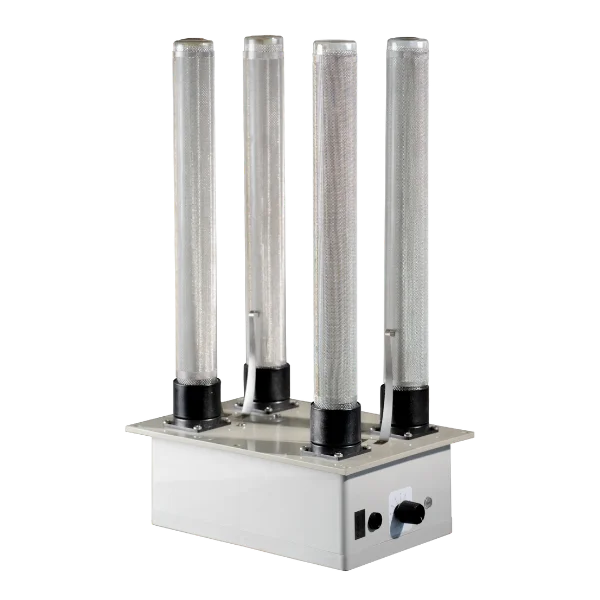
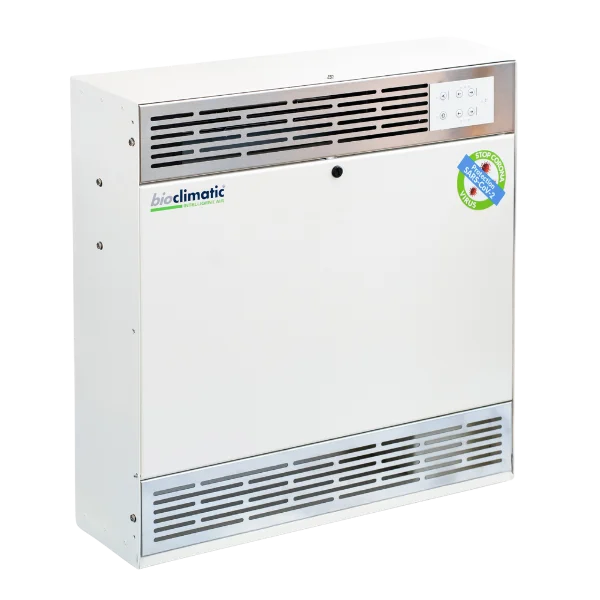
Thanks to bipolar ionization, air purifiers from bioclimatic are able to achieve these benefits. The following devices from the range are particularly suitable for this:
The diverse range of air purification devices from bioclimatic, such as the powerful Air Cleaner Q for busy indoor spaces and the versatile Air Cleaner V for various applications, offers effective solutions for improving air quality and combating germs. With innovative technologies such as ionization paired with flexible installation options, bioclimatic enables comprehensive air purification and contributes to the creation of healthy indoor environments.
Although the use of air purifiers at airports offers numerous advantages, airport operators also face various obstacles that need to be overcome. Some of these are:
Bioclimatic for clean air at airports
With thorough planning, collaboration with experts and a holistic approach, these stumbling blocks can be overcome sustainably. The use of air purifiers at the airport can therefore lead to a significant improvement in air quality, protect health and increase comfort for mobile travelers and permanent airport staff alike, as they can breathe safely and freely. We would be happy to support you in your project and equip an entire airport or individual areas with high-performance air purifiers.
You are currently viewing a placeholder content from Vimeo. To access the actual content, click the button below. Please note that doing so will share data with third-party providers.
More InformationYou are currently viewing a placeholder content from YouTube. To access the actual content, click the button below. Please note that doing so will share data with third-party providers.
More InformationYou need to load content from reCAPTCHA to submit the form. Please note that doing so will share data with third-party providers.
More InformationYou are currently viewing a placeholder content from Google Maps. To access the actual content, click the button below. Please note that doing so will share data with third-party providers.
More Information